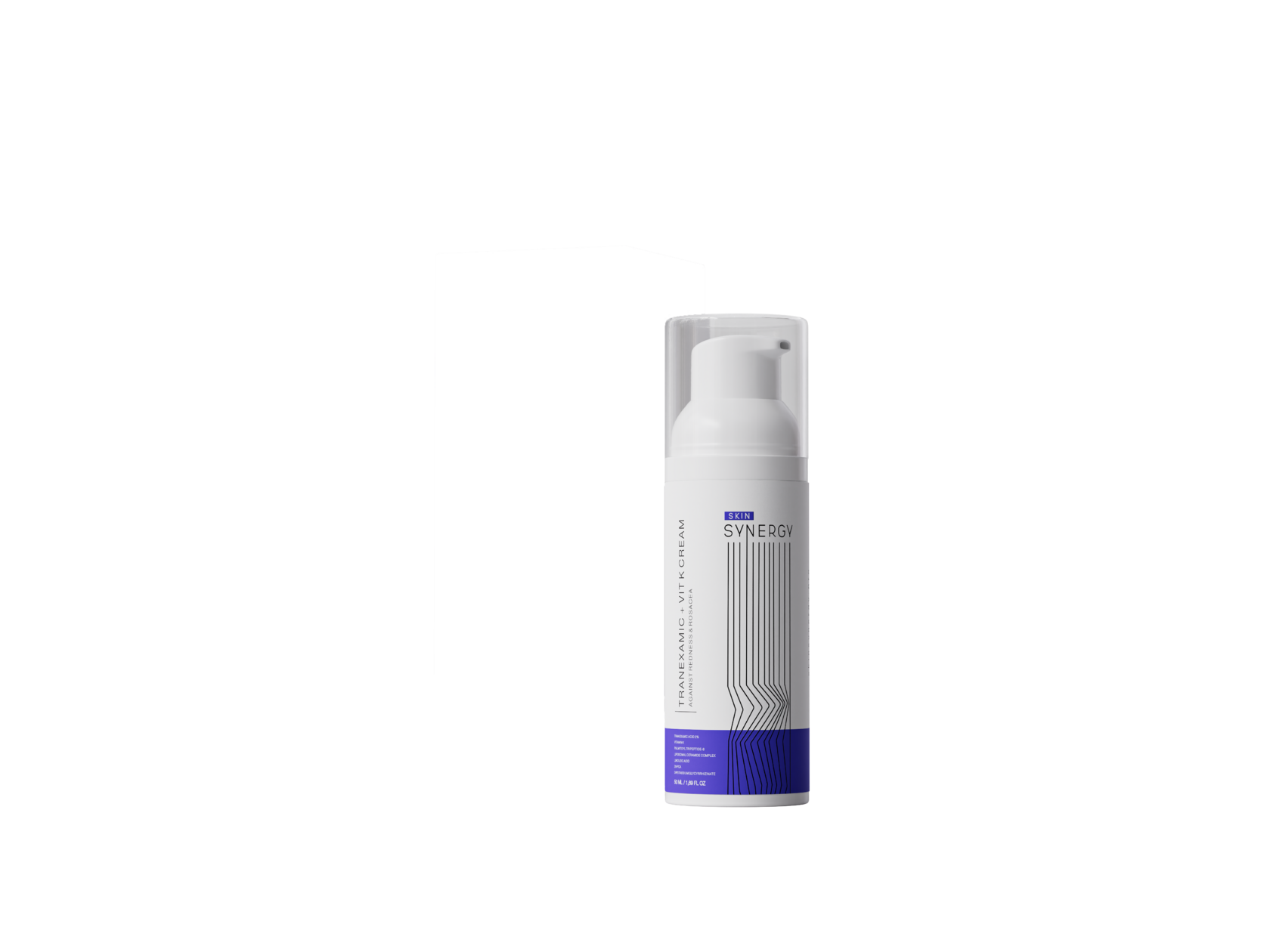



Cream with Vitamin K and Tranexamic Acid is developed to reduce the manifestations of rosacea and couperose. It is suitable for sensitive skin: helps reduce redness, soothes the skin, and supports the restoration of the skin protective barrier.
Presentation: airless pump bottle, 50 ml (1,69 fl oz).
Texture
A comfortable texture that spreads easily over the skin, moisturizes and nourishes, leaving soft, velvety finish.
Dipotassium Glycyrrhizinate, Linoleic Acid, C12-15 Alkyl Benzoate, Pentylene Glycol, Xylitylglucoside, Phenoxyethanol, Ammonium Acryloyldimethyltaurate/VP Copolymer, Sodium Stearoyl Lactylate, Zinc PCA, Dextrin, Trehalose, Sodium Lauroyl Glutamate, Sodium Stearoyl Glutamate, Hydrogenated Lecithin, Bisabolol, Ectoin, Glycine Soja Oil, Caprylic/Capric Triglyceride, Ceramide NS, Phytosterols, Ethylhexylglycerin, 1,2-Hexanediol, Tocopherol, Anhydroxylitol, Xylitol, Sucrose Stearate, Beta-Sitosterol, Phytonadione, Squalene, Ceramide NP, Sodium Chloride, Palmitoyl Tripeptide-8, Ceramide AP, Ceramide.
It inhibits the activation of profibrinolysin (plasminogen) and its conversion into fibrinolysin (plasmin). The acid blocks the epidermal plasminogen activator responsible for excessive capillary growth in rosacea, as well as pigmentation and inflammation. It exhibits anti-allergic and anti-inflammatory properties, suppresses melanin production and neovascularization. It also improves skin barrier function and hydration of the stratum corneum.
A neuropeptide with anti-inflammatory activity that helps prevent neurogenic inflammation. It reduces the release of inflammatory mediators that cause irritation, redness and discomfort. It improves microcirculation and decreases blood vessel permeability, reducing the visibility of couperose.
It soothes inflammation and provides antibacterial action. It inhibits TLR receptors on the surface of keratinocytes and dendritic cells involved in the pathogenesis of rosacea. PCA is a component of the natural moisturizing factor and helps bind water within the stratum corneum.
Contraindications:
- Individual intolerance to any of the ingredients.
- Relief of rosacea symptoms1
- Couperosis2
- Vascular skin disorders3
- Hydration and restoration of the skin barrier4
- Prevention of hyperpigmentation5
- Sensitive skin with any level of sebum production6
info@skinsynergy.pro
You accept the privacy policy and the processing of your personal data by clicking the button.